Personal Loan vs Credit Card: Which Costs Less?
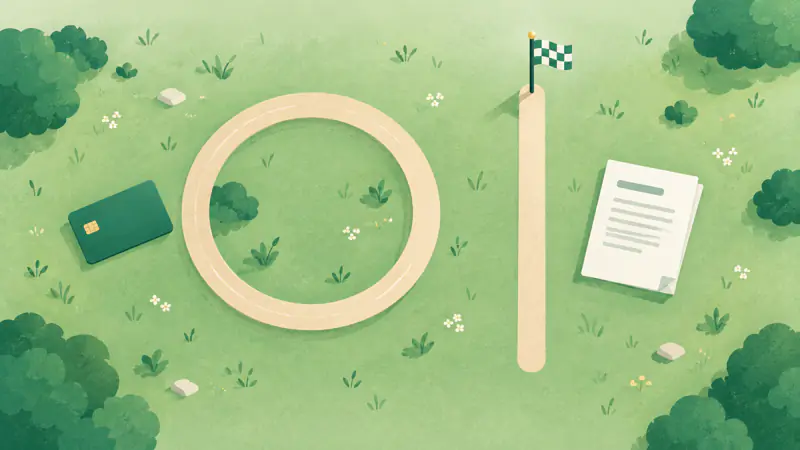
Choosing between a personal loan vs credit card mostly comes down to how long you will take to repay. Both let you borrow, but they charge interest in different ways and show up differently on your credit report. This guide compares how each one works, runs the numbers on a $6,000 balance, and covers when each tends to cost less.
How the two products differ
A personal installment loan is closed-end credit: the Consumer Financial Protection Bureau (CFPB) explains that the lender gives you all the money at the beginning and you repay it in set amounts over a specific period. A credit card is revolving credit, which FICO describes as giving you more flexibility in how much you pay each month, subject to the minimum payment (myFICO).
| Feature | Personal loan | Credit card |
|---|---|---|
| How you get the money | All at once, at the start | Charge as you go, up to your credit limit |
| Payments | Generally the same every month | Any amount at or above the minimum |
| End date | Fixed term, from a few months to several years | None; depends on what you pay |
| How interest is figured | On the balance you still owe, inside each payment | Often daily, on your average daily balance |
| Interest-free window | None; interest is built into every scheduled payment | Grace period on purchases if you pay in full |
| Average rate at commercial banks, August 2026 | 11.90% on 24-month loans | 22.36% on accounts charged interest |
The last row comes from the Federal Reserve's G.19 release dated October 7, 2026 (August figures are preliminary). The card figure covers accounts that were actually assessed interest; the release calculates it as the annualized ratio of total finance charges to the average daily balances they were charged on. Your own offers can differ from both averages.
How interest works on each
On a credit card, many issuers calculate the interest you owe daily, based on your average daily balance (CFPB). Most cards offer a grace period on purchases, though card companies are not required to. If you are not carrying a balance and pay in full by the due date, you avoid interest on new purchases. If you don't pay in full by the due date, you lose the grace period: you are charged interest on the unpaid portion, and purchases in the new billing cycle accrue interest from the date each one is made (CFPB).
Your statement shows how long payoff would take at the minimum payment, and how much you would need to pay each month to clear the current balance in 36 months. The CFPB adds that paying only the minimum could mean taking years to pay off the card (CFPB).
On a personal loan, each fixed payment covers that month's interest plus part of the principal, so the balance reaches zero on a known date. Our amortization example shows how that split changes month by month.
Worked comparison: a $6,000 balance
Suppose you owe $6,000 on a credit card at a 22% APR and you are considering a 36-month personal loan at 12% to pay it off. Both rates are close to the August 2026 averages above. To keep the arithmetic readable, card interest here is charged monthly at 22% ÷ 12; a card that compounds daily would come out slightly different.
| Scenario | Monthly payment | Months to pay off | Total interest |
|---|---|---|---|
| Personal loan, 12%, no fee | $199.29 | 36 | $1,174.24 |
| Card, 22%, same $199.29 a month | $199.29 | 45 | $2,807.54 |
| Card, 22%, paid off in 36 months | $229.14 | 36 | $2,249.21 |
| Card, 22%, $150 a month | $150.00 | 73 | $4,913.44 |
| Personal loan, 12%, 5% fee taken from proceeds | $209.77 | 36 | $1,236.14 plus a $315.79 fee |
What the numbers say:
- Paying the same $199.29 a month, the loan finishes nine months sooner and saves $1,633.30 in interest.
- To clear the card in 36 months you would pay $229.14 a month and still spend $1,074.97 more in interest than on the loan.
- At $150 a month the card takes 73 months, a little over six years, and costs $4,913.44 in interest.
- With a 5% origination fee taken from the proceeds, you would need to borrow $6,315.79 to get $6,000. Interest plus fee comes to $1,551.93, still $697.28 less than clearing the card in 36 months. A higher fee or rate narrows that gap, which is why the personal loan origination fee belongs in the comparison.
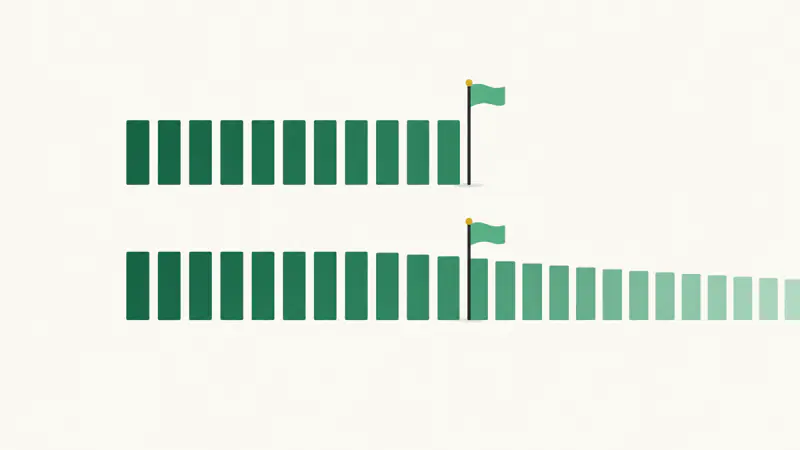
The savings only hold if the card balance stays at zero after the loan pays it off. The CFPB warns that if you are in debt because you spend more than you earn, a consolidation loan probably won't help unless you cut spending or raise income. It also notes that a lower monthly payment may simply reflect a longer term, which can mean paying more overall (CFPB).
When a credit card can cost less
- You pay in full every month. With a grace period, purchases paid off by the due date cost no interest at all.
- The balance is small and short-lived. Suppose you put $1,500 on a 22% card and clear it in three payments of $518.44. The interest is $55.33. A 5% origination fee on a $1,500 loan would be $75 before any interest.
- A promotional balance transfer fits your timeline. The CFPB notes that many card companies offer zero-percent or low-interest balance transfers, but the promotional rate lasts a limited time and the transfer fee is usually a percentage of the amount or a fixed amount, whichever is more. New purchases on that card get no grace period until the whole balance, including the transfer, is paid off, and being more than 60 days late can raise the rate on all balances.
When a personal loan can cost less
- You need months or years to repay. The longer a balance stays on a high-rate card, the more a lower loan rate is worth, as the table shows.
- You want a fixed end date. Equal payments over a set term mean the balance reaches zero on a known date, with no minimum-payment option to stretch it out.
- The total cost still wins after fees. Compare the loan's APR and total of payments with what the card would cost at the payment you can actually afford.
How each one affects your credit
Amounts owed. This category makes up 30% of a FICO Score, and FICO says your credit utilization ratio on revolving accounts is an important part of it (myFICO). Installment loans are measured differently: FICO looks at how much is still owed compared with the original loan amount. Suppose your $6,000 card balance sits against $15,000 in total card limits. That is 40% utilization. If a loan pays the cards off, revolving utilization falls to 0%, while a new installment balance appears. FICO also notes that in some cases a low utilization ratio helps more than using none of your available credit.
New credit. Applying for a loan adds an inquiry, which stays on your credit report for two years, though FICO Scores only count inquiries from the last 12 months. A new account also lowers the average age of your accounts (myFICO).
Credit mix. Credit mix is 10% of a FICO Score. FICO says it most likely won't decide whether you get credit, and that taking out a loan just to improve your mix is "probably not" worth it.
Payment history. Whichever you choose, on-time payments matter most. The CFPB notes that failing to pay a personal installment loan on time can significantly affect your credit scores and report.
Questions to settle before you decide
- How many months will it realistically take you to pay the balance off?
- What APR and total of payments would the loan have, including any fee?
- Can you afford the loan's fixed payment every month?
- Will you stop adding new charges to the card you pay off?
- Would a short promotional rate on a card cover the whole payoff period?
If you decide to look at loans, compare offers on the same amount and term. Our guide to prequalification vs preapproval explains how to gather estimates before a formal application.
Sources
- Consumer Financial Protection Bureau — What is a personal installment loan?
- Consumer Financial Protection Bureau — How does my credit card company calculate the amount of interest I owe?
- Consumer Financial Protection Bureau — What is a grace period for a credit card?
- Consumer Financial Protection Bureau — Minimum payment and 36-month payoff disclosures on your bill
- Consumer Financial Protection Bureau — What do I need to know about consolidating my credit card debt?
- Consumer Financial Protection Bureau — What is amortization and how could it affect my auto loan?
- Board of Governors of the Federal Reserve System — Consumer Credit G.19, current release
- myFICO — Types of credit and how they affect your FICO Score
- myFICO — How owing money can impact your credit score
- myFICO — How new credit impacts your credit score
 Personal Loan Interest Rates: How Lenders Set Them
 Personal Loan Origination Fee: How It Works and What It Costs
 How to Qualify for a Personal Loan With Fair Credit
 Personal Loan Prequalification vs Preapproval: What Each Means
 Cosigning a Loan: What You're Agreeing To and How to Protect Yourself