Personal Loan Interest Rates: How Lenders Set Them
Personal loan interest rates are not posted like a price tag. Each lender sets your rate after looking at your credit, your income and debts, and the loan you ask for, so two people borrowing the same amount on the same day can get very different offers. This guide explains the difference between the interest rate and the APR, what lenders weigh, how fixed and variable rates differ, and how a rate turns into a monthly payment.
Interest rate vs APR
Two percentages describe the price of a personal loan, and they are easy to mix up.
- Interest rate. The Consumer Financial Protection Bureau (CFPB) describes it as the cost you pay the lender for borrowing money. It is charged on the balance you still owe.
- Annual percentage rate (APR). The APR is the interest rate plus the lender's additional fees, including origination charges and other fees charged when the loan is made.
When a loan has no fees, the two numbers match. When it has an upfront fee, the APR comes out higher than the interest rate. The CFPB calls the APR the standard way to compare how much loans cost, because it compares the interest and fees with the amount you borrow over a one-year period (CFPB key terms).
The federal Truth in Lending Act requires lenders to disclose the APR. Under Regulation Z, the lender must give you those disclosures before consummation (§ 1026.17), which the regulation defines as the moment you become contractually obligated on the loan (§ 1026.2). The CFPB's advice is to compare APRs with APRs, not one lender's APR with another lender's interest rate. Our guide to the personal loan origination fee shows how far a fee can push the APR above the rate.
What lenders weigh when they set your rate
According to the CFPB, most lenders consider the following when they set the interest rate and terms of a personal installment loan:
| Factor | What it tells the lender |
|---|---|
| Your credit score and credit reports | How you have handled credit in the past |
| Income | Whether you have money coming in to cover the payment |
| Debts | How much of that income already goes to other payments |
| Amount and length of the loan | How much is at risk and for how long |
| Interest rates permitted by state law | The ceiling your state allows, where one applies |
| Other factors, such as bank account transactions | How money moves through your accounts |
Credit history. In general, the CFPB says, the higher your credit score, the lower your rates will be. FICO explains the lender's side: a higher score indicates lower risk, which can lead to better terms such as lower interest rates (myFICO). The CFPB also points out that lenders are not required to offer you the best available rates, which is why comparing offers matters. If your score sits in the middle of the range, see how to qualify for a personal loan with fair credit.
Debt-to-income ratio. Your DTI is all your monthly debt payments divided by your gross monthly income (CFPB). Suppose you earn $5,000 a month before taxes and pay $600 a month toward other debts. Your DTI is 12.0%. Adding a loan payment of $332.14 would raise it to 18.6%. The CFPB notes that different loan products and lenders have different DTI limits, so there is no single cutoff that applies everywhere.
Amount and term. How much you borrow and for how long are part of the pricing, not only the payment. A longer term lowers each payment but gives interest more months to add up, as the example further down shows.
Fixed vs variable personal loan rates
The CFPB notes that interest rates for personal loans can be either fixed or adjustable.
- Fixed rate. The rate is set when you take the loan. Combined with installments that, as the CFPB puts it, are generally the same throughout the loan, a fixed rate makes your payment predictable.
- Variable (adjustable) rate. The rate is tied to an index. In the CFPB's words, a variable APR "changes with the index interest rate," such as the prime rate (CFPB). Your cost can rise or fall over the life of the loan.
If the APR on a closed-end loan can increase after you sign, Regulation Z § 1026.18 requires the lender's disclosures to include:
- The circumstances under which the rate may increase
- Any limitations on the increase
- The effect of an increase
- An example of the payment terms that would result from an increase
Read that section before choosing a variable rate. A lower starting rate can end up costing more than a fixed one if the index climbs.
What the Federal Reserve's rate data shows
The Federal Reserve's G.19 consumer credit release, dated October 7, 2026, tracks the average rate on 24-month personal loans at commercial banks:
| Period | Average rate, 24-month personal loans |
|---|---|
| 2023 | 11.87% |
| 2024 | 12.27% |
| 2025 | 11.50% |
| Second quarter of 2026 | 11.86% |
| August 2026 (preliminary) | 11.90% |
Know what the number measures before you use it. The release's footnotes describe these rates as APRs as specified by Regulation Z, calculated as a simple unweighted average of each bank's most common rate during the first calendar week of the middle month of each quarter. The series covers only commercial banks and only a 24-month term. Your own quote can land well above or below it, depending on the factors in the table above, so treat it as a reference point rather than a target.
From rate to payment: an amortization example
A personal installment loan is repaid in fixed amounts. In an amortizing loan, each payment covers part of the interest and part of the principal. The CFPB explains that at the start more of each payment goes to interest, so the principal balance falls slowly at first and then more quickly near the end.
Suppose you borrow $10,000 at a 12% APR with no fees, for 36 months. Interest accrues at 1% a month (12% ÷ 12), and the fixed payment works out to $332.14.
| Month | Payment | Interest | Principal | Balance after payment |
|---|---|---|---|---|
| 1 | $332.14 | $100.00 | $232.14 | $9,767.86 |
| 2 | $332.14 | $97.68 | $234.46 | $9,533.40 |
| 3 | $332.14 | $95.33 | $236.81 | $9,296.59 |
| 12 | $332.14 | $73.15 | $258.99 | $7,055.88 |
| 24 | $332.14 | $40.30 | $291.84 | $3,738.38 |
| 36 | $332.28 | $3.29 | $328.99 | $0.00 |
Interest is 30.1% of the first payment and about 1% of the last. Over the full term you pay $1,957.18 in interest. The final payment is a few cents larger because each month's interest is rounded to the cent.
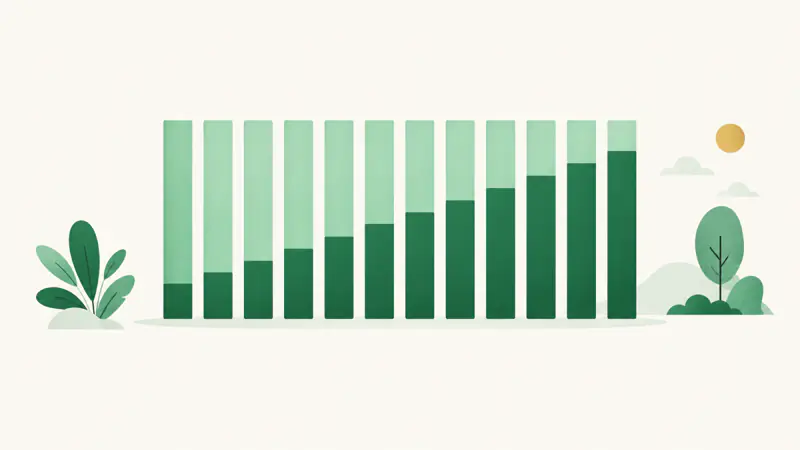
Now stretch the same loan to 60 months. The payment drops to $222.44, but total interest rises to $3,346.77, which is $1,389.59 more. That matches the CFPB's warning: the longer the term, the lower your monthly payments but the more you pay in interest over the life of the loan.
The rate matters just as much. Here is the same $10,000 over 36 months at four rates:
| APR | Monthly payment | Total interest |
|---|---|---|
| 9% | $318.00 | $1,447.88 |
| 12% | $332.14 | $1,957.18 |
| 15% | $346.65 | $2,479.56 |
| 18% | $361.52 | $3,014.89 |
Each three-point step adds roughly $509 to $535 in interest over three years. A quote that is a few points lower is worth real money, even when the monthly difference looks small.
How to compare personal loan rate quotes
Use this checklist when you line up offers:
- Compare APRs, not interest rates. The APR folds in the origination fee and other charges made when the loan is made.
- Hold the amount and term constant. A 60-month quote and a 36-month quote are not comparable on payment alone.
- Confirm fixed or variable. For a variable rate, find the disclosure that explains when and how much the rate can rise.
- Look at the total of payments. Regulation Z describes it as "the amount you will have paid when you have made all scheduled payments."
- Check the prepayment statement. For a loan where interest is charged on the unpaid balance, the disclosures must say whether a charge may be imposed for paying all or part of the principal early.
- Ask about other fees. The CFPB's list of factors comes with a reminder to find out whether other fees are tied to the loan.
If a lender offers to estimate your terms before a full application, read our guide to prequalification vs preapproval to see how those estimates differ from a final offer and how they touch your credit report.
Sources
- Consumer Financial Protection Bureau — What is the difference between a loan interest rate and the APR?
- Consumer Financial Protection Bureau — Credit cards key terms
- Consumer Financial Protection Bureau — What is a personal installment loan?
- Consumer Financial Protection Bureau — What is a debt-to-income ratio?
- Consumer Financial Protection Bureau — What is the difference between a fixed APR and a variable APR?
- Consumer Financial Protection Bureau — What is amortization and how could it affect my auto loan?
- Consumer Financial Protection Bureau — Regulation Z § 1026.2 Definitions and rules of construction
- Consumer Financial Protection Bureau — Regulation Z § 1026.17 General disclosure requirements
- Consumer Financial Protection Bureau — Regulation Z § 1026.18 Content of disclosures
- Board of Governors of the Federal Reserve System — Consumer Credit G.19, current release
- myFICO — What is a FICO Score and why is it important?
 Personal Loan Origination Fee: How It Works and What It Costs
 Personal Loan vs Credit Card: Which Costs Less?
 How to Qualify for a Personal Loan With Fair Credit
 Personal Loan Prequalification vs Preapproval: What Each Means
 Cosigning a Loan: What You're Agreeing To and How to Protect Yourself