How Buy Now, Pay Later Works: Installments, Fees and Your Budget

Buy now, pay later (BNPL) is a short installment loan you take out at checkout. The CFPB describes the common version as four interest-free payments made every two weeks, with the first due at checkout or two weeks later. It is still a loan: while many plans charge no interest, most charge late fees for missed payments, and many lenders set the payments to come out automatically.
This guide covers how the payments and fees work, what CFPB research found about borrowers who stack several plans, what happens with returns and disputes, how BNPL shows up on credit reports, and how to budget when plans overlap.
How a pay-in-4 loan works
The CFPB's 2022 market report describes the typical structure: a purchase of $50 to $1,000 is divided into four equal installments, with the first paid as a down payment at checkout and the next three due at two-week intervals over six weeks.
The FTC explains the money flow. You pay part of the cost and get the item, the company that manages the plan pays the store in full, and you then make your payments to that company, not to the store.
Suppose you buy a $240 jacket with a pay-in-4 plan on October 1:
| Payment | Due date | Amount |
|---|---|---|
| 1 (at checkout) | October 1 | $60 |
| 2 | October 15 | $60 |
| 3 | October 29 | $60 |
| 4 | November 12 | $60 |
Applying is quick. The CFPB says you generally must be at least 18, have a mobile phone number, and have a debit card, credit card or bank account to make payments. Most BNPL loans don't require a hard credit inquiry, but your creditworthiness may be evaluated each time you start a purchase.
Fees, autopay and missed payments
The CFPB says each lender has different fees and policies, so the loan's terms are the place to check. The FTC lists fees some plans charge for each payment, for paying late or for changing your payment date.
Autopay has its own risks. If you set up automatic repayment from your debit card or bank account and the money isn't there, your bank may charge an overdraft or non-sufficient funds fee. The FTC adds that if you pay with a credit card, you should make sure the payment won't push you over your credit limit. The CFPB's 2022 report counted a requirement to use autopay for all loan payments among the risks it found.
Missing a payment can lead to:
- A late fee, and in some cases more than one; the CFPB's 2022 study found companies that assess multiple late fees on the same missed payment
- Your account being frozen for new purchases until you catch up
- Your debt being turned over to a debt collector (CFPB)
In that study, 10.5% of unique users were charged at least one late fee in 2021, up from 7.8% in 2020.
What CFPB research found about BNPL borrowers
The CFPB has published several studies of BNPL use. Each describes a specific year, so the dates matter.
| CFPB report (date) | Finding |
|---|---|
| January 13, 2025, data for 2022 | 21.2% of consumers with a credit record financed at least one purchase with BNPL, up from 17.6% in 2021 |
| January 13, 2025 | About 63% of borrowers had multiple simultaneous loans at some point in the year; 33% borrowed from more than one lender |
| January 13, 2025 | About 20% were heavy users, averaging more than one new loan a month |
| January 13, 2025 | For borrowers ages 18 to 24, BNPL made up 28% of unsecured debt in the months they borrowed, versus 17% across all ages |
| March 2, 2023, survey data | 18% of borrowers had at least one reported delinquency on another account, versus 7% of non-borrowers |
The 2023 report adds context: many of the differences between borrowers and non-borrowers existed before BNPL use, and the data can't show whether BNPL causes more delinquencies. The CFPB's December 10, 2025 market report, based on data from six large companies, says the market kept expanding from 2019 to 2023.
Stacking is the practical risk. The 2022 study noted that borrowers can easily take out several loans in a short time at multiple lenders, and because most lenders didn't report these loans to the major credit reporting companies, lenders were unaware of borrowers' current liabilities.
Returns and disputes
Your repayment agreement is with the BNPL lender, not the store. A December 2021 CFPB blog post explained that even after you return an item, the agreement may require you to keep paying until the return or dispute is resolved. Returns are not unusual: in the 2022 study, 13.7% of loans in 2021 had at least part of the order returned.
The federal rules here have changed. On May 22, 2024, the CFPB issued an interpretive rule treating BNPL lenders as credit card providers, with dispute and refund obligations. Its BNPL compliance page now says that on May 12, 2025, the CFPB withdrew several guidance documents, including that rule.
The FTC suggests checking the store's and the plan's reputation for returns and disputes before you use a plan, and notes that these plans typically offer fewer protections. Some states have their own consumer credit laws that apply to BNPL; your state attorney general can explain them. If you return something, keep the receipt, tell the lender, and watch the next scheduled payment.
How BNPL affects your credit report
The CFPB's consumer page, last reviewed in August 2024, says most pay-in-four products don't report to the major credit reporting companies, so your repayment won't help or hurt your scores. The exception is collections: an unpaid loan turned over to a debt collector could be reported and hurt your scores. The CFPB's January 2025 report likewise says lenders have typically not reported BNPL loans.
Reporting isn't uniform, though. The FTC says plan companies might report your payments to the nationwide credit bureaus, where a late payment could hurt your credit and on-time payments might help. Read each plan's terms to find out which applies.
Budgeting with overlapping plans
One plan is easy to track. Several plans running at once are harder, because their due dates interleave. Suppose you add two more plans to the $240 jacket: a $400 purchase on October 20 and a $160 purchase on November 10, each split into four payments every two weeks.
| Month | Plan A ($240) | Plan B ($400) | Plan C ($160) | Total due |
|---|---|---|---|---|
| October | $180 | $100 | — | $280 |
| November | $60 | $200 | $80 | $340 |
| December | — | $100 | $80 | $180 |
| Total | $240 | $400 | $160 | $800 |
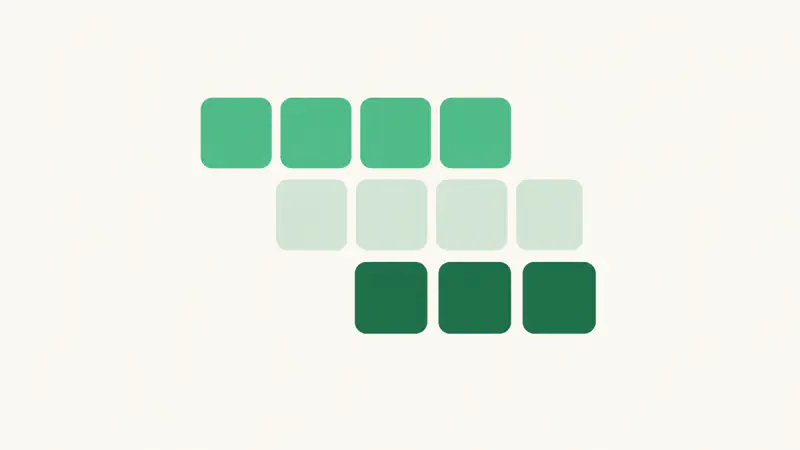
November carries five payments from three plans. If your budget sets aside $250 a month for these purchases, you're $30 over in October and $90 over in November, then $70 under in December. And $260 of November's $340 pays for things bought in October. If one autopay fails and the plan charges a hypothetical $10 late fee, November's total rises to $350.
A simple habit helps: list every plan's remaining payments by date in one place, and add new purchases only if the busiest month still fits.
When BNPL becomes debt to pay down
The CFPB says it plainly: just because you qualify for a BNPL loan doesn't mean you should use it. Treat your plans as debt to pay down, not as a way to pay, if you notice any of these:
- You're using a new plan to free up cash for an older plan's payment
- You've been charged a late fee, or a lender has frozen your account
- Your monthly BNPL total competes with rent, utilities or minimum payments on other debts
At that point, pause new plans, list every balance and due date, and pay the plans down alongside your other debts. A payoff method like the debt snowball or avalanche can set the order. If credit card balances are part of the picture, see how to get out of credit card debt.
Key takeaways
- A typical pay-in-4 loan splits a purchase into four payments over six weeks, with the first due at checkout.
- Interest may be zero, but most plans charge late fees, and autopay can trigger bank overdraft fees.
- CFPB research found that about 63% of borrowers in 2022 had more than one loan at a time.
- Returning an item may not stop your payments until the return is resolved.
- Add up overlapping plans by month before you start a new one.
Sources
- Consumer Financial Protection Bureau — What is a Buy Now, Pay Later (BNPL) loan?
- Consumer Financial Protection Bureau — Do Buy Now, Pay Later (BNPL) loans have fees?
- Consumer Financial Protection Bureau — What happens if I can't pay back a Buy Now, Pay Later (BNPL) loan?
- Consumer Financial Protection Bureau — Will a Buy Now, Pay Later (BNPL) loan impact my credit scores?
- Consumer Financial Protection Bureau — Buy Now, Pay Later: Market trends and consumer impacts
- Consumer Financial Protection Bureau — CFPB Study Details the Rapid Growth of "Buy Now, Pay Later" Lending
- Consumer Financial Protection Bureau — CFPB Publishes New Findings on Financial Profiles of Buy Now, Pay Later Borrowers
- Consumer Financial Protection Bureau — CFPB Research Reveals Heavy Buy Now, Pay Later Use Among Borrowers with High Credit Balances and Multiple Pay-in-Four Loans
- Consumer Financial Protection Bureau — Consumer Use of Buy Now, Pay Later and Other Unsecured Debt
- Consumer Financial Protection Bureau — The Buy Now, Pay Later Market
- Consumer Financial Protection Bureau — Know before you buy (now, pay later) this holiday season
- Consumer Financial Protection Bureau — CFPB Takes Action to Ensure Consumers Can Dispute Charges and Obtain Refunds on Buy Now, Pay Later Loans
- Consumer Financial Protection Bureau — Buy Now, Pay Later (BNPL) products
- Federal Trade Commission — Buy Now, Pay Later, Rent-to-Own, Lease-to-Own, and Layaway
 How to Get Out of Credit Card Debt: The Minimum Payment Math and a Payoff Plan
 Debt Snowball vs Avalanche: Both Methods Run on the Same Four Debts
 Debt Consolidation Loan vs Balance Transfer: Costs, Fees and Risks Compared
 Debt Management Plan vs Debt Settlement: Fees, Credit and Tax Effects
 Debt-to-Income Ratio: How to Calculate It and How Lenders Use It
 Time-Barred Debt: What Collectors Can and Can't Do About Old Debts