Pay Yourself First: How to Automate Saving From Every Paycheck

To pay yourself first, you move a set amount into savings as soon as each paycheck arrives, before you pay other bills or start spending. The CFPB describes it as determining how much you can set aside for savings every pay period and putting the money in the bank before you pay your other bills. Automating the transfer means it happens without a decision each month.
This guide covers the ways to automate it, how to pick an amount, where the money can go, how to avoid overdrafts and a 12-month example.
What pay yourself first means
Without a plan, saving often means keeping whatever is left at the end of the month, and in a tight month nothing is. Paying yourself first reverses the order: savings is treated like a bill that comes due on payday, and the rest of your budget works with what remains.
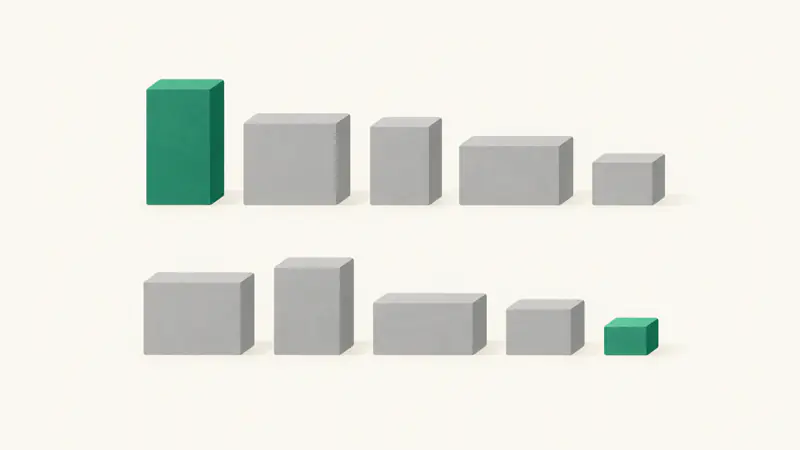
| Save what's left | Pay yourself first | |
|---|---|---|
| When you save | End of the month | Payday |
| What sets the amount | Whatever spending didn't use | A number you chose in advance |
| Typical result | Varies, often zero in a tight month | The same amount every pay period |
| Effort | A decision every month | Set it up once, then review |
A monthly margin and savings tend to go together. In the Federal Reserve's survey of households in 2025, published in May 2026, 86 percent of adults who said they always had money left over at the end of the month had savings to cover three months of expenses, compared with 13 percent of those who never had money left over. The report notes that spending less than income on a regular basis is one way to build an emergency fund.
Three ways to automate it
Recurring transfers
Many banks and credit unions let you set up recurring transfers, choosing the amount and the date, often weekly or monthly, to move money from checking to savings. The CFPB's example: if you're paid on the first of the month, schedule a transfer early in the month, which lets you pay yourself first before you commit those funds to other expenses. A related CFPB page suggests timing it a day or two after your expected paycheck.
Check whether your bank sets a minimum for automatic transfers; you can start at the minimum and adjust it over time. Make sure you understand any terms, conditions or fees.
Split direct deposit
Instead of sending your whole paycheck to checking, you may be able to have part of it deposited straight into savings. For this to work, your employer must offer direct deposit and an option to split your paycheck into multiple accounts. The CFPB notes this option helps especially if you're prone to spending down most of your paycheck before the next payday, because the savings never land in checking.
Retirement contributions through payroll
A workplace retirement plan is another way to pay yourself first. The IRS describes a 401(k) as a plan feature that allows employees to contribute a portion of their wages to individual accounts, so the saving happens through your pay rather than through a transfer you make. The CFPB suggests considering employer programs such as a 401(k), if available, and learning whether you're eligible for an employer match, where your employer puts in money in addition to your contributions. For 2026, the IRS says the amount individuals can contribute to their 401(k) plans has increased to $24,500, up from $23,500 for 2025.
The percentages below refer to take-home pay: what lands in your account after payroll deductions, including any retirement contributions.
How much to pay yourself first
There's no required percentage. A practical approach is to start with an amount you won't need to pull back, then raise it as you find room. Suppose you take home $1,700 twice a month, or $3,400 a month:
| Share of take-home pay | Per paycheck | Per month | Per year |
|---|---|---|---|
| 5% | $85 | $170 | $2,040 |
| 10% | $170 | $340 | $4,080 |
| 15% | $255 | $510 | $6,120 |
If you use the 50/30/20 budget, the transfer comes out of the 20% share. Good times to raise it are a raise, a paid-off debt or a bill that ends, because the money hasn't been absorbed into everyday spending yet.
Where the money goes
One paycheck can feed several accounts or goals, each with its own transfer:
- Emergency fund. A cash cushion for unplanned bills, kept in its own savings account so the transfer lands somewhere you won't spend from. Our guide on how much to save in an emergency fund shows how to size it and build it in stages.
- Sinking funds. Known irregular costs, such as a yearly membership or back-to-school shopping, get a monthly share. See sinking funds for how to set the amounts.
- Longer-term goals. A down payment or a planned purchase can get its own transfer. If you have several, our guide to setting financial goals shows how to put them in order and turn each into a monthly amount.
- Retirement through payroll, as described above, runs alongside these transfers rather than out of them.
Avoiding overdrafts when you automate
An automatic transfer doesn't check whether your rent has cleared. The CFPB explains that an overdraft occurs when you don't have enough money in your account to cover a transaction but the bank pays it anyway, and that you can overdraw through automatic bill payments and electronic withdrawals. According to the CFPB, many banks and credit unions charge $30 or more per overdraft transaction.
Ways to keep an automatic transfer from causing one:
- Schedule it after payday, not on it. Deposits may not be immediately available, and transactions don't always update your balance right away or in the order you expect.
- Know your other autopay dates. The CFPB suggests knowing when prescheduled electronic transfers, such as rent or utility bills, will be paid and how much they will be.
- Sign up for low-balance alerts by email or text.
- Keep a small cushion in checking so one surprise charge doesn't collide with the transfer.
- Start smaller if you come up short. A transfer you can keep is worth more than a bigger one you have to cancel.
If your budget is tight
Paying yourself first can feel out of reach when every dollar is already spoken for. The CFPB acknowledges that saving can be especially tough if you find yourself living paycheck to paycheck. In the example above, a 10% transfer leaves $3,060 a month, or $1,530 per paycheck, for everything else; if your bills need more than that, start lower. A few ways to begin anyway:
- Start at the minimum. The CFPB notes that consistently putting money aside, even in small amounts, will add up over time.
- Fix the timing before the amount. If you come up short at the end of the month, the CFPB suggests looking at the timing of your transfers and using a bill calendar to track what you owe and when it's due. Moving the transfer to the paycheck that carries fewer bills can make the same amount workable.
- Try saving your change. Some financial institutions round up everyday purchases and move the difference to savings. Because these contributions tend to be small, the CFPB suggests checking your progress and adjusting your other saving accordingly.
A 12-month example
Continuing with $1,700 twice a month, suppose you start at 5%, move to 8% after four months and to 10% after eight. Each month, $70 goes to sinking funds and the rest to your emergency fund:
| Months | Rate | Per paycheck | Per month | To sinking funds | To emergency fund | Saved in the period |
|---|---|---|---|---|---|---|
| 1–4 | 5% | $85 | $170 | $280 | $400 | $680 |
| 5–8 | 8% | $136 | $272 | $280 | $808 | $1,088 |
| 9–12 | 10% | $170 | $340 | $280 | $1,080 | $1,360 |
| Year | $840 | $2,288 | $3,128 |
After 12 months you've saved $3,128, an average of about 7.7% of take-home pay. The emergency fund passes $2,000 in month 11, and $840 is waiting in sinking funds for the year's irregular bills. You never decided to save in any given month; you decided twice to raise the rate.
Key takeaways
- Pay yourself first means moving savings out of each paycheck before you pay other bills.
- Recurring transfers, split direct deposit and payroll retirement contributions all automate it.
- Pick a percentage of take-home pay you can keep, then raise it when your income rises or a bill ends.
- Give each destination its own transfer: an emergency fund, sinking funds and longer-term goals.
- Schedule transfers after payday and watch your balance to avoid overdraft fees.
Sources
- Consumer Financial Protection Bureau — Set a goal and start a savings habit
- Consumer Financial Protection Bureau — Looking for an easy way to save money? Make it automatic
- Consumer Financial Protection Bureau — How to save for emergencies and the future
- Consumer Financial Protection Bureau — Six ways to save this year
- Consumer Financial Protection Bureau — What is an overdraft?
- Consumer Financial Protection Bureau — Know your overdraft options
- Federal Reserve Board — Economic Well-Being of U.S. Households in 2025: Savings and Investments
- Internal Revenue Service — 401(k) plans
- Internal Revenue Service — 401(k) limit increases to $24,500 for 2026, IRA limit increases to $7,500
 The 50/30/20 Budget: How It Works, With a Worked Example
 How to Make a Zero-Based Budget, With a Monthly Example
 How Much to Save in an Emergency Fund
 Sinking Funds: How to Save Monthly for Irregular Expenses
 How to Budget on Irregular Income
 Financial Milestones by Age: A Decade-by-Decade Money Checklist
 Emotional Spending: How to Spot Your Triggers and Slow Down
 How a Joint Bank Account Works for Couples
 How to Budget for Concert Tickets and the True Cost of a Show
 How to Set Financial Goals and Work Out the Monthly Amount
 How to Track Your Spending, With a 30-Day Example
 How to Make a Travel Budget, Line by Line
 Side Hustle Taxes: How Much to Set Aside From Each Payment
 How to Budget for In-Game Purchases: A Guide for Parents